Shrlock

Year
2024
Industry
B2B SaaS + HR
North Star
The operating system for modern HR consultants
Everything started with 80 one-on-one interviews with working HR consultants, mapped into workflow diagrams, pain-point clusters, and opportunity themes.
The population split into two profiles. The over-tooled consultants were running four to six SaaS subscriptions and barely using half the features, paying for tools that didn't integrate and created constant context-switching. The under-tooled consultants were running entire practices on spreadsheets, email, and memory, with operations fragile enough that one missed compliance deadline could mean a lawsuit. Both groups had normalized the friction. They described it as just how consulting works, and that normalization was the clearest signal that the market was ready for something purpose-built.
The finding that reshaped the product was that the highest-friction moments weren't billing or invoicing, which is where most people assumed the pain lived. The real bottleneck was client onboarding and compliance context-switching. Every new engagement was a cold start. Consultants rebuilt context from scratch every time, re-learning each client's regulatory environment, payroll setup, and org structure. For consultants charging $100 to $200 per hour, that overhead translated to $25,000 to $100,000 in annual lost revenue from administrative friction alone.
That insight pointed directly at the product architecture.
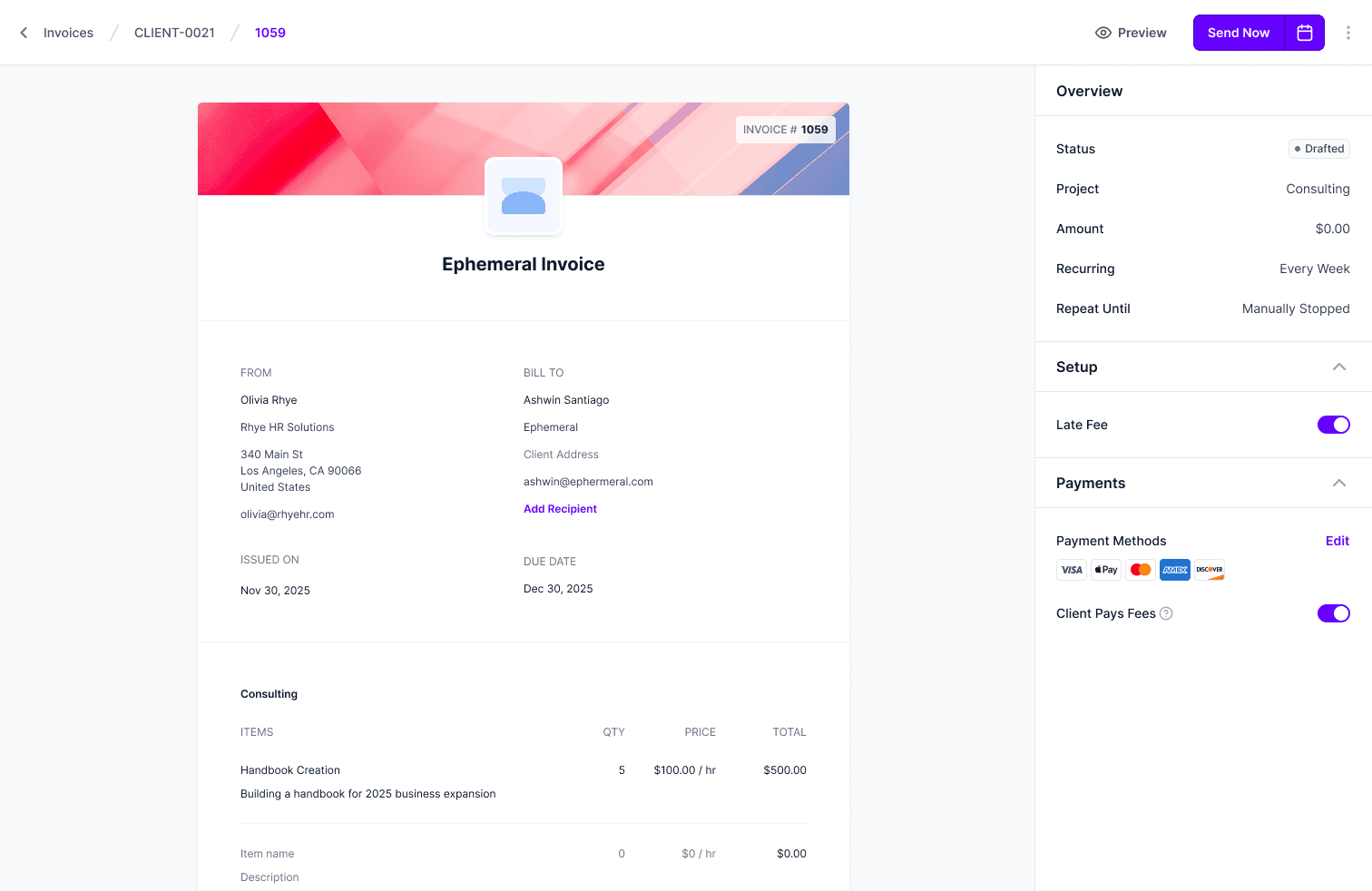
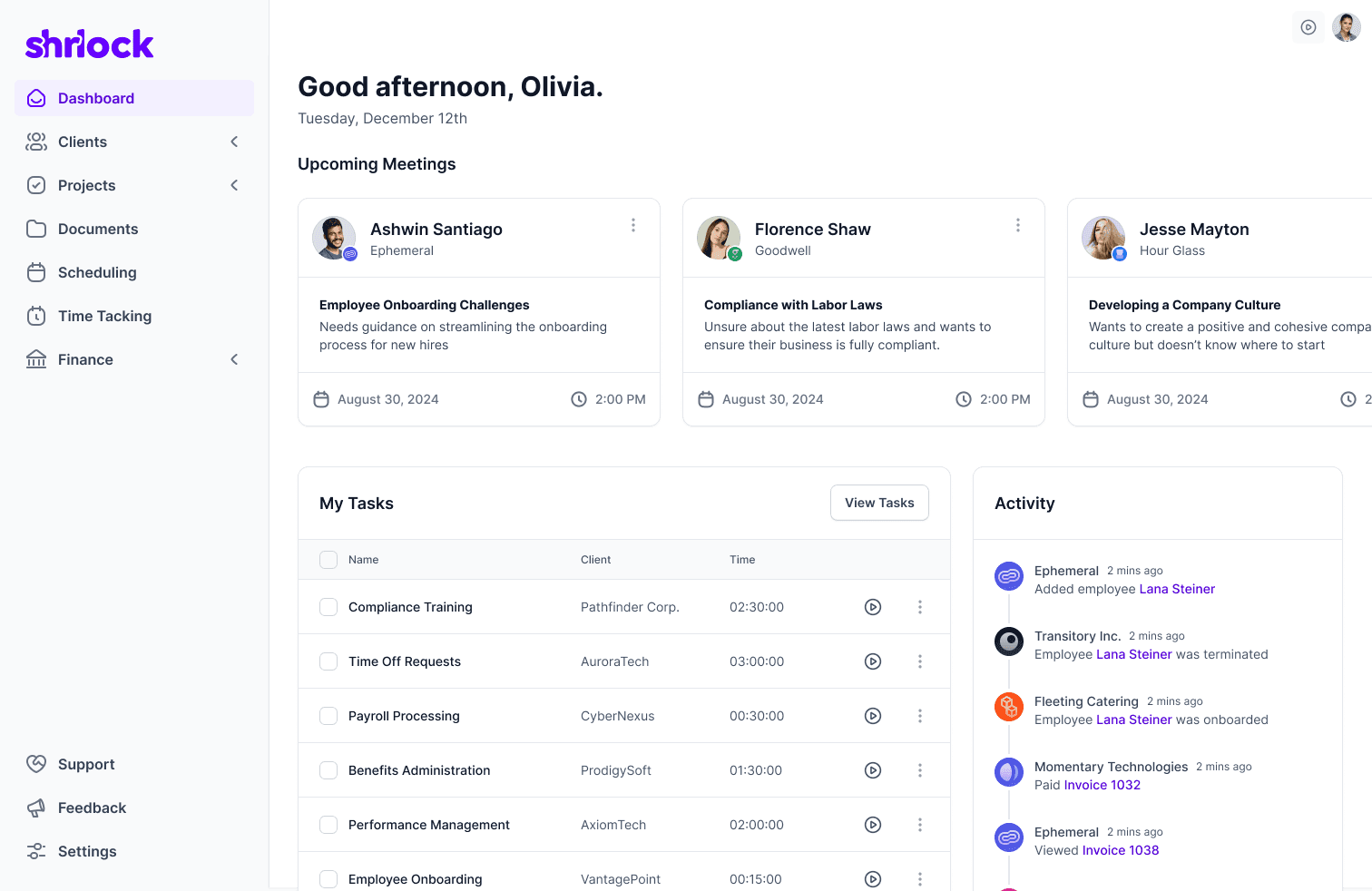
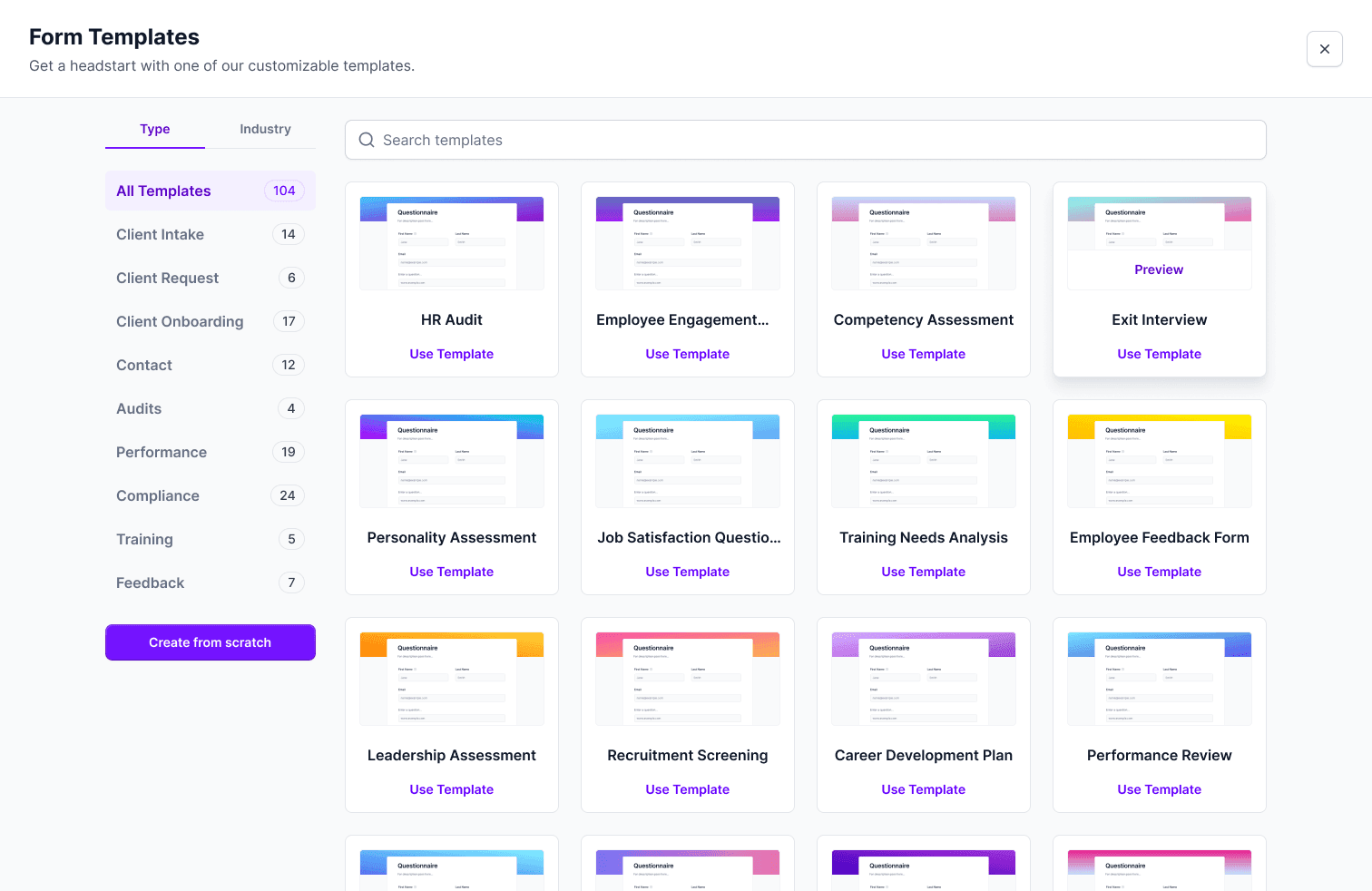
The core design decision was making the client workspace the center of gravity rather than a traditional CRM. Each client engagement gets its own environment with compliance data, documents, communications, and time tracking unified in a single view. A cross-client dashboard sits on top as the command center, but the real work happens inside the workspace.
Six modules make up the platform:
Client management gives consultants a single view of all their accounts, contacts, and notes. No more toggling between systems to find basic information about who you're working with.
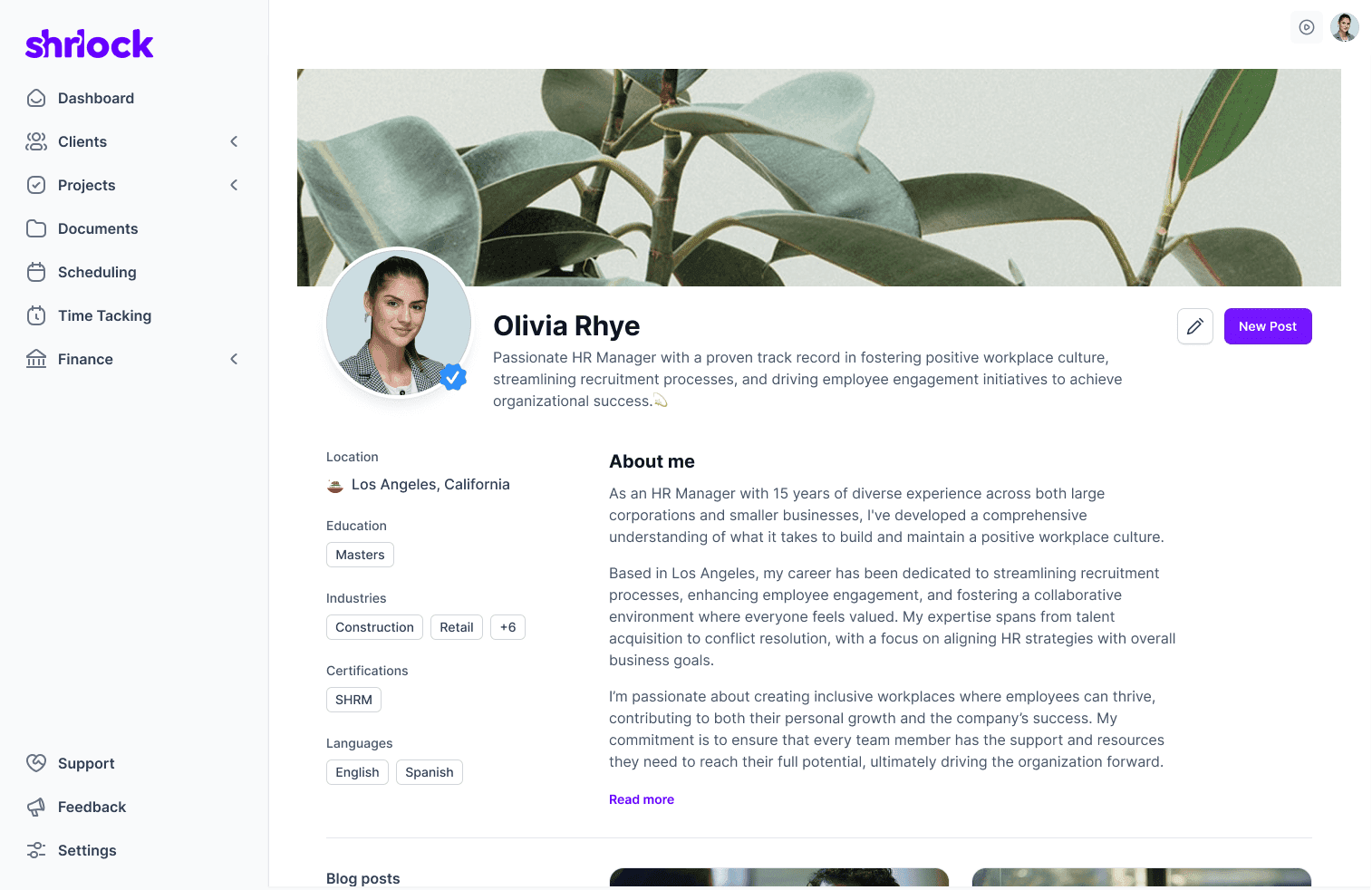
Staff profiles provide visibility into every employee across client accounts. Headcount tracking, employee details, and contractor information all accessible without logging into each client's separate payroll or HRIS system.
Projects and tasks handle assignment, prioritization, time estimation, and tracking across all client engagements. Consultants can set time budgets per project and generate accurate timesheets without a separate tool.
Scheduling consolidates multiple client calendars into one unified view. HR consultants who serve a dozen clients were managing a dozen separate calendars. That friction is gone.
Time tracking captures billable hours directly on projects with pre-set billing rules. One consultant reported recovering $900 in the first month just by tracking time more accurately than her spreadsheet allowed.
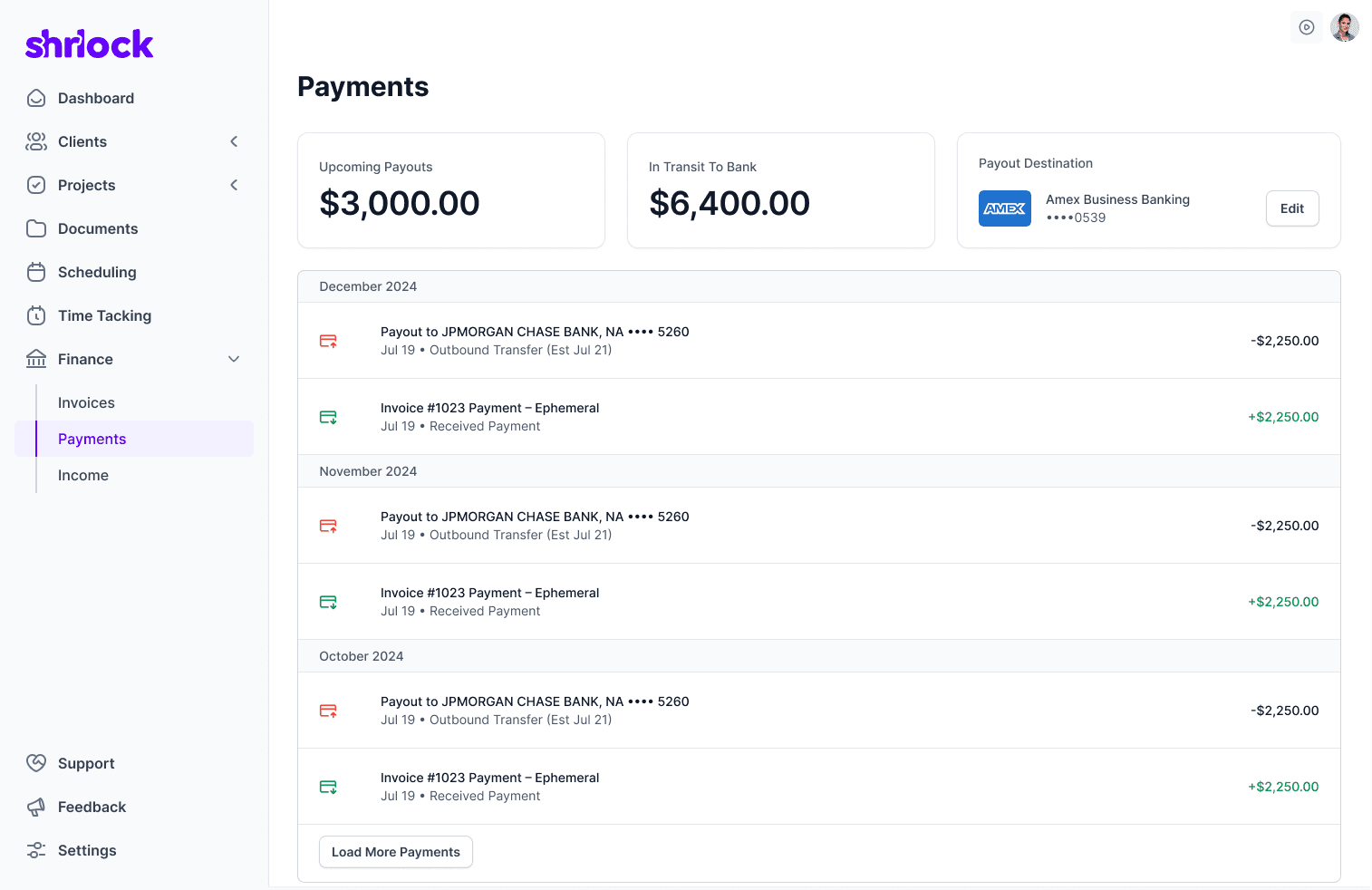
Invoicing and billing handles custom invoices, recurring payments, retainers, and automated reminders, integrated directly into the engagement workflow rather than bolted on as a separate tool.
The data model underneath all of this was designed around the workspace-per-client pattern. Compliance data, documents, and time entries are scoped to individual engagements rather than flattened into a single CRM table. That was a deliberate architectural choice. It keeps regulatory context isolated between clients, which is a real legal concern in HR consulting, and it makes the product feel like opening a dedicated folder for each engagement rather than filtering a shared database.
We built with an offshore engineering team, which shaped how I worked as a designer. Every spec, every component-level interaction design, and every data model document had to be written to survive timezone handoffs without losing intent. There was no real-time pairing to fall back on. If a spec was ambiguous, it wouldn't surface as a question for twelve hours.
The design system had to be explicit enough that engineers in a different timezone could implement screens without interpretation. Component behavior, state management, edge cases, and data relationships were all documented at a level of detail that most design-to-engineering handoffs don't require. That discipline produced better documentation than I would have written for a co-located team, and the implementation fidelity reflected it.
I built the brand from scratch: name, logo, visual system, tone of voice, and the messaging framework that carried through the product, the marketing site, investor materials, and onboarding flows.
The brand needed to be professional enough for a compliance-adjacent product where trust is the baseline, but approachable enough that independent consultants felt like the software was built for them specifically. It also had to look nothing like the legacy HR platforms already in the space, which universally default to corporate blue and stock-photo sincerity.
The tone mirrors the consultants we interviewed: direct, practical, no patience for software that wastes their time. The visual system is clean and confident, built on a purple-and-dark palette that signals modern software without reading as corporate. The positioning speaks to consultants who want to run a real business, not just do good HR work and hope the operations take care of themselves.
We designed Shrlock as an AI-first platform in early 2024. The capabilities weren't fully mature at the time, but we made structural decisions during the zero-to-one phase that would accommodate AI as a natural extension rather than a retrofit.
The integration points we identified included compliance automation that surfaces relevant regulatory updates based on client location and industry, intelligent consultant-to-client matching based on specialization and track record, and document generation that templates common HR deliverables like handbooks, policies, and offer letters with client-specific context pre-populated.
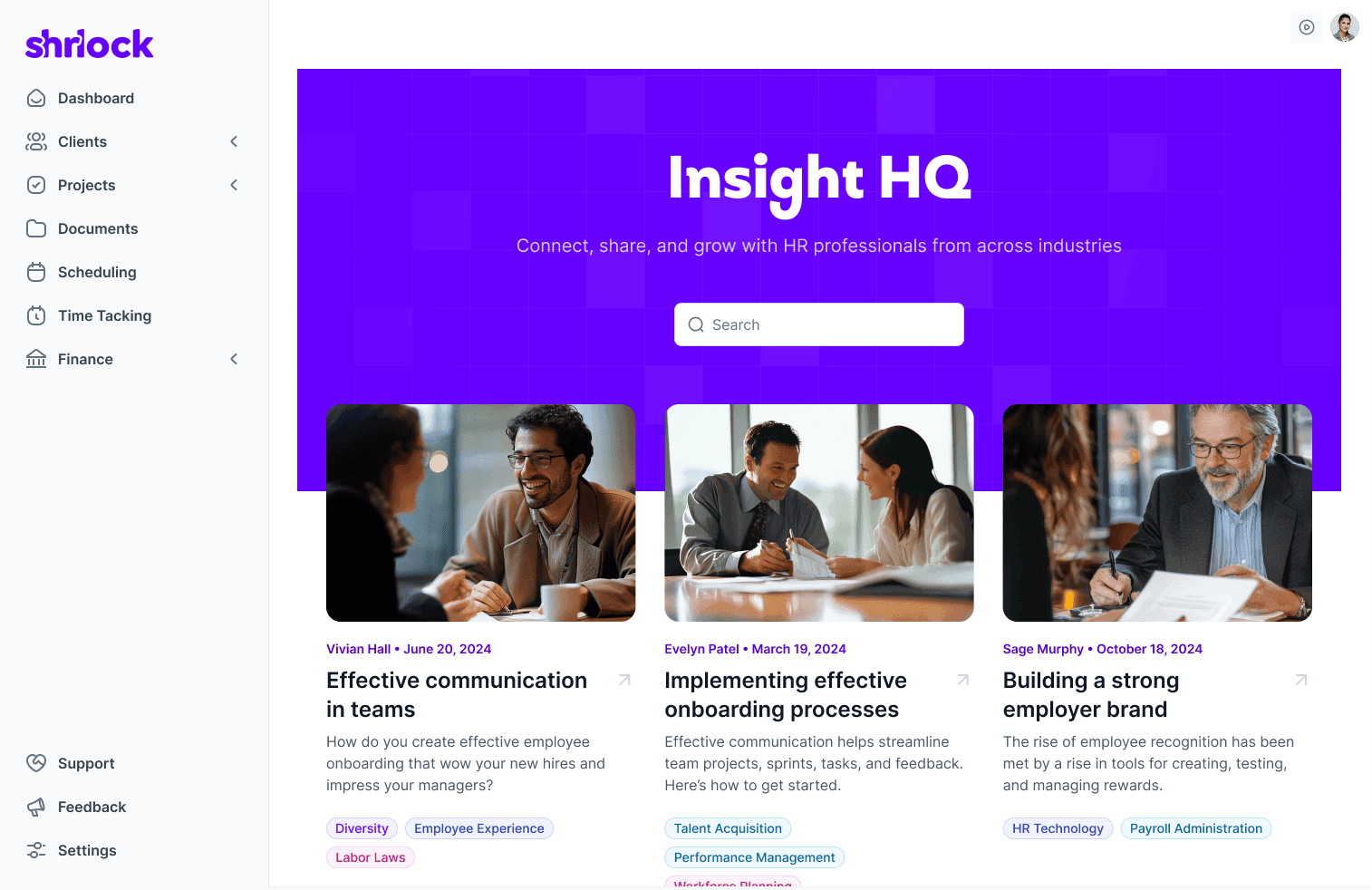
Those capabilities are now on Shrlock's public product roadmap, listed as upcoming features alongside payroll integrations and analytics. The data model, the workspace architecture, and the way compliance data is organized were all designed with these capabilities in mind from the start.
Shrlock raised $200K in pre-seed funding and now serves hundreds of HR consultants running more efficient, more profitable practices.