Moonlight Longevity

Year
2025
Industry
Medical Aesthetics · Longevity & Wellness
North Star
Exclusivity is earned at first glance.
Every coastal stretch from La Jolla to Santa Monica has a medspa on the corner, and they all look the same: clinical blues, abstract medical symbols, safe serif fonts. That entire visual vocabulary was wrong for this audience and this location.
Rancho Santa Fe clientele don't choose based on price or convenience. They choose based on whether a place feels like it belongs in their world. These are people accustomed to members-only clubs and experiences that feel curated for them. A new clinic in this market needed to project years of credibility before seeing a single patient.
The structural challenge made it harder. Nine distinct treatment categories, from aesthetics to hormone therapy to mobile wellness events, all needed to live under one identity without reading as a disconnected menu. The founder's ambitions also extended beyond clinical services into branded products, community events, and potentially a full lifestyle brand. Whatever we built had to work across an unusually wide range of applications: embroidery on scrubs and towels where the mark had to stay clean at small scale, foil stamping on packaging where it had to reproduce in metallic, digital contexts from a 16px favicon to a full-width hero, and environmental signage readable at six feet or more.
I studied the competitive landscape beyond local medspas, looking instead at the luxury wellness brands this audience actually admires. High-end hospitality, private membership clubs, premium skincare lines. The reference set wasn't other clinics. It was the broader world of luxury that this clientele already lives in.
I also studied the physical location the founder planned to lease: its architecture, its material palette, the neighborhood context. Rancho Santa Fe has a specific visual language built on warm earth tones, natural materials, and a sensibility where nothing tries too hard. The brand needed to feel native to that environment rather than imported from somewhere else.
The foundational positioning came from Moonlight's philosophy that beauty is biological and that aesthetics and longevity are the same conversation. That became the basis for every design decision. But the deeper layer was psychographic. This clientele sees itself as distinct, and they gravitate toward experiences that reinforce that identity. The brand had to evoke a private club rather than a clinic. Color, typography, spacing, photography direction, and even service descriptions all flowed from that positioning.
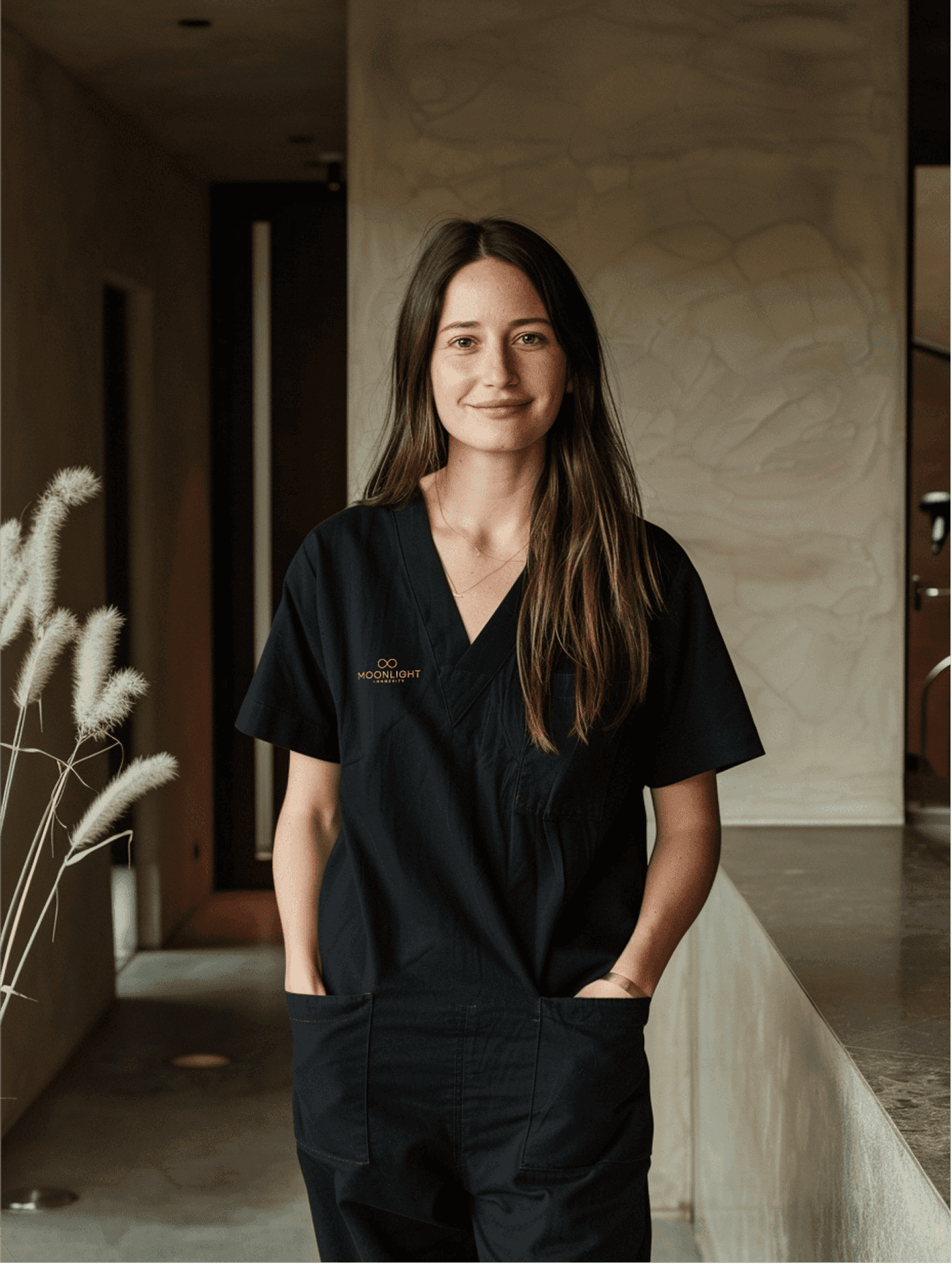
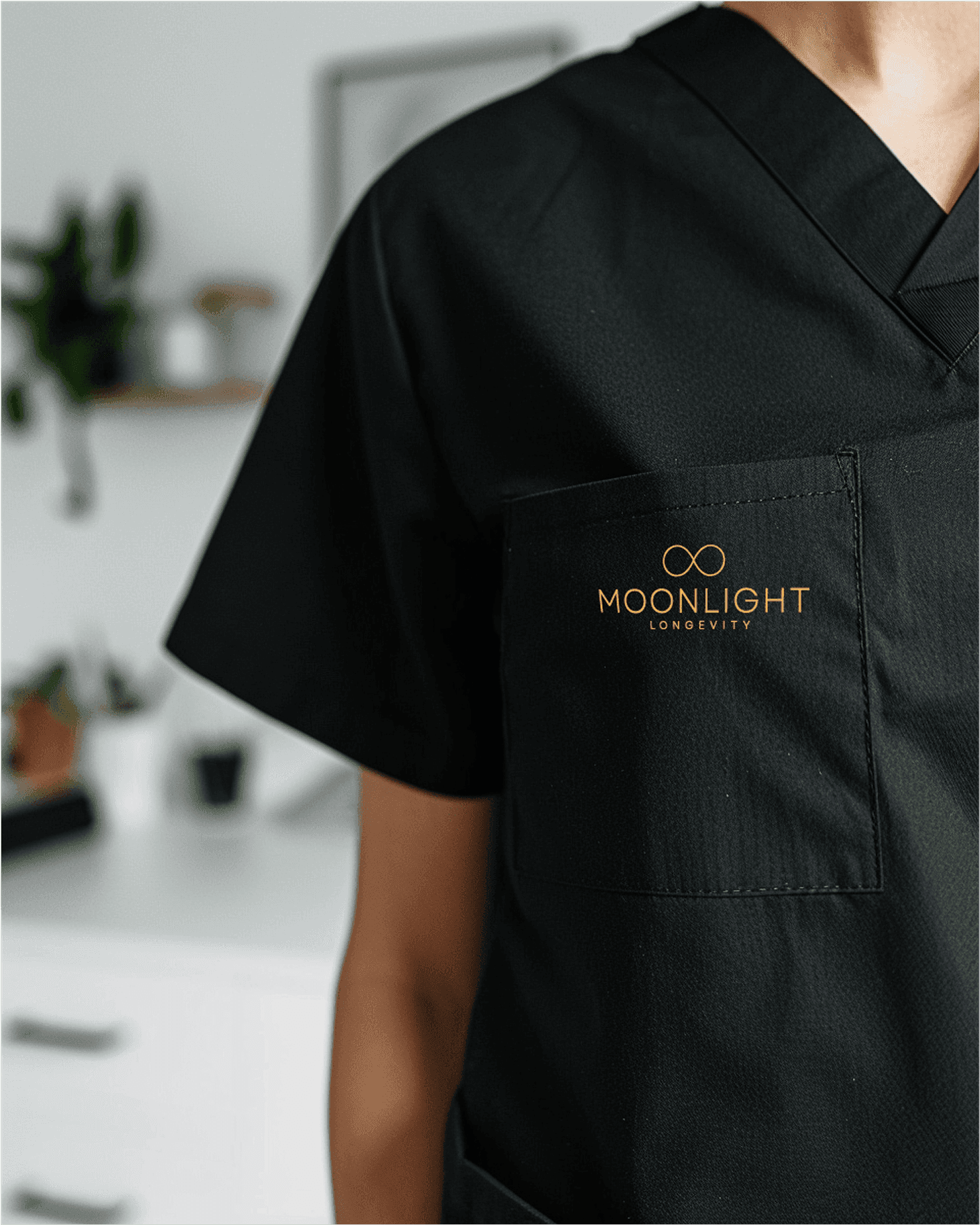
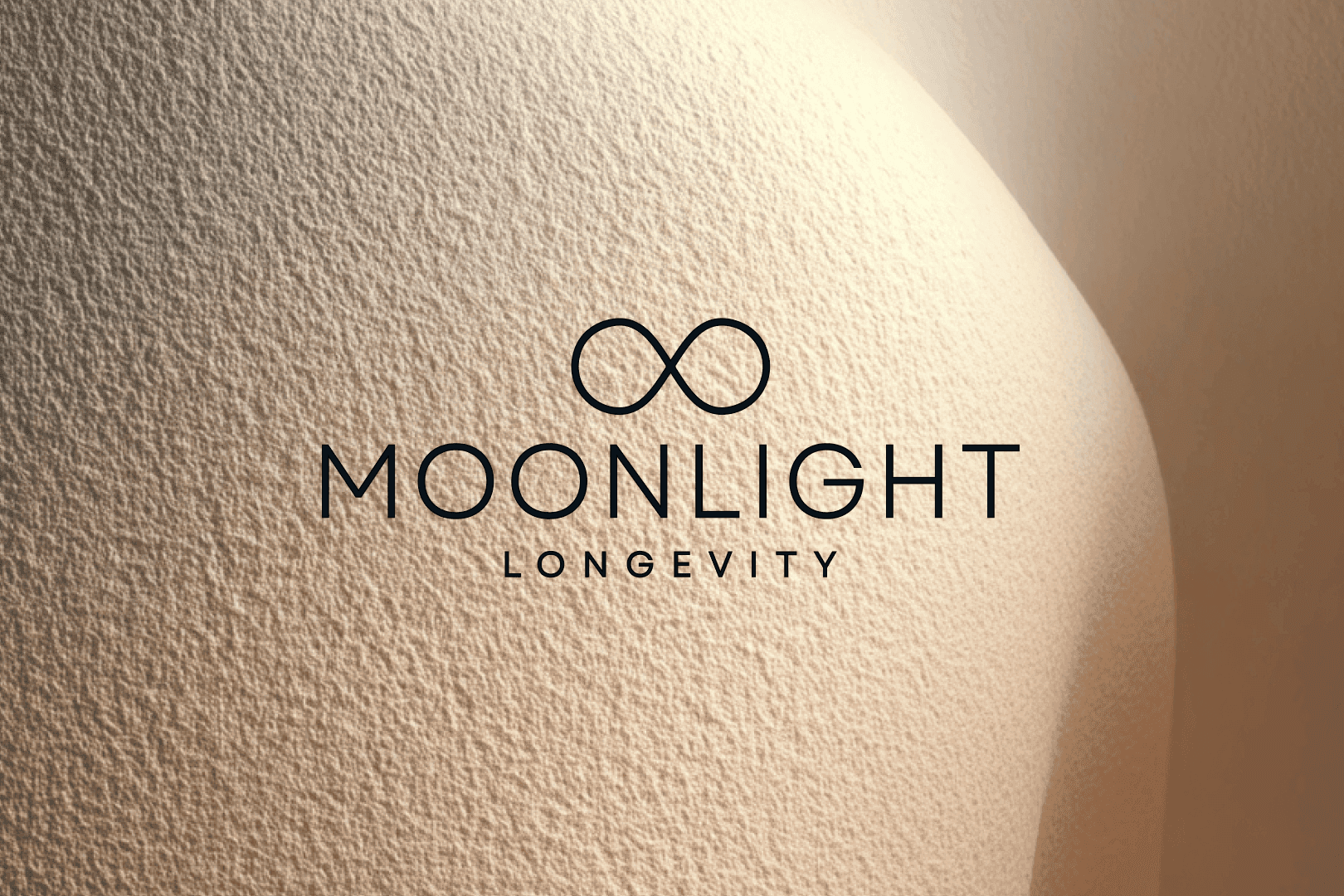
The logomark came through exploration rather than a brief. The company name naturally suggested lunar imagery, but literal moon shapes felt obvious. During experimentation, I placed two crescent moons side by side and they formed an infinity symbol. The connection to longevity was immediate and felt inevitable once you saw it.
Unlike a standard infinity symbol, which reads as geometric and cold, the double-moon version carries organic warmth. It reads as a symbol first and reveals its lunar origin on closer inspection. That layered legibility gives the mark depth without requiring explanation.
The stroke weight is deliberately thin, echoing the fine lines of luxury fashion marks and jewelry branding, tested at every scale to ensure it stays functional. The dark-and-gold palette was a deliberate choice: the dark foundation (near-black rather than pure black) gives gravity and reads as nighttime, intimacy, sanctuary. Gold carries exclusivity without the coldness of silver. Together they evoke a members-only space rather than a clinical one. And practically, the dark base lets photography and typography do the expressive work while gold accents create hierarchy without competing visual noise. For a practice with nine service categories, that restraint is what keeps the system scalable.
I built the site in Framer with a nine-service information architecture designed to scale. Each service category has its own page and visual treatment, but all share the same structural template and design language. Adding a tenth or eleventh service slots in without rethinking the system.
The membership positioning runs throughout the site, presented as an investment rather than a subscription. Language, pricing structure, and CTA placement all reinforce the exclusivity frame. The responsive implementation is fully mobile-first, with the dark palette tested across device screens for contrast and readability.
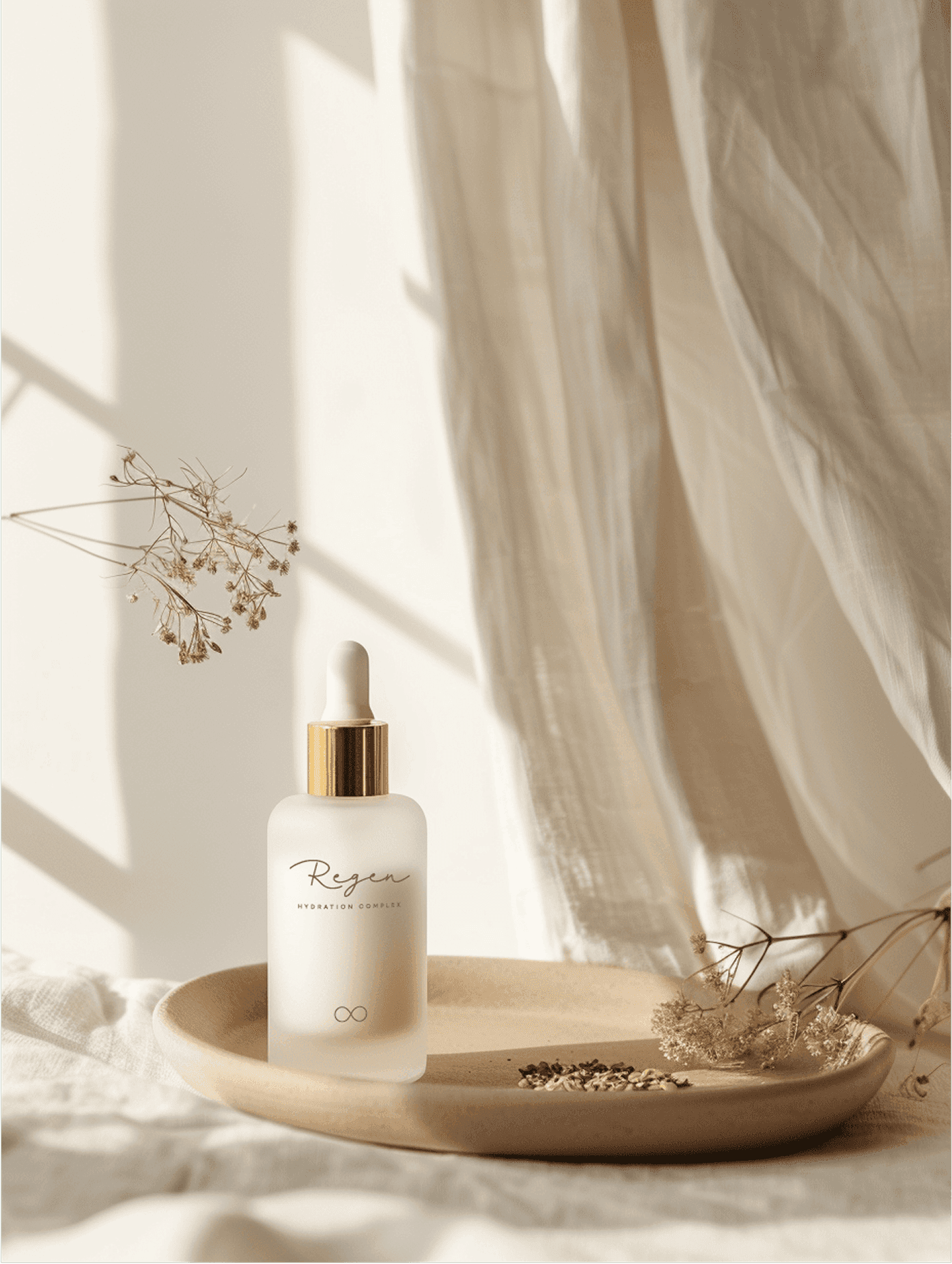
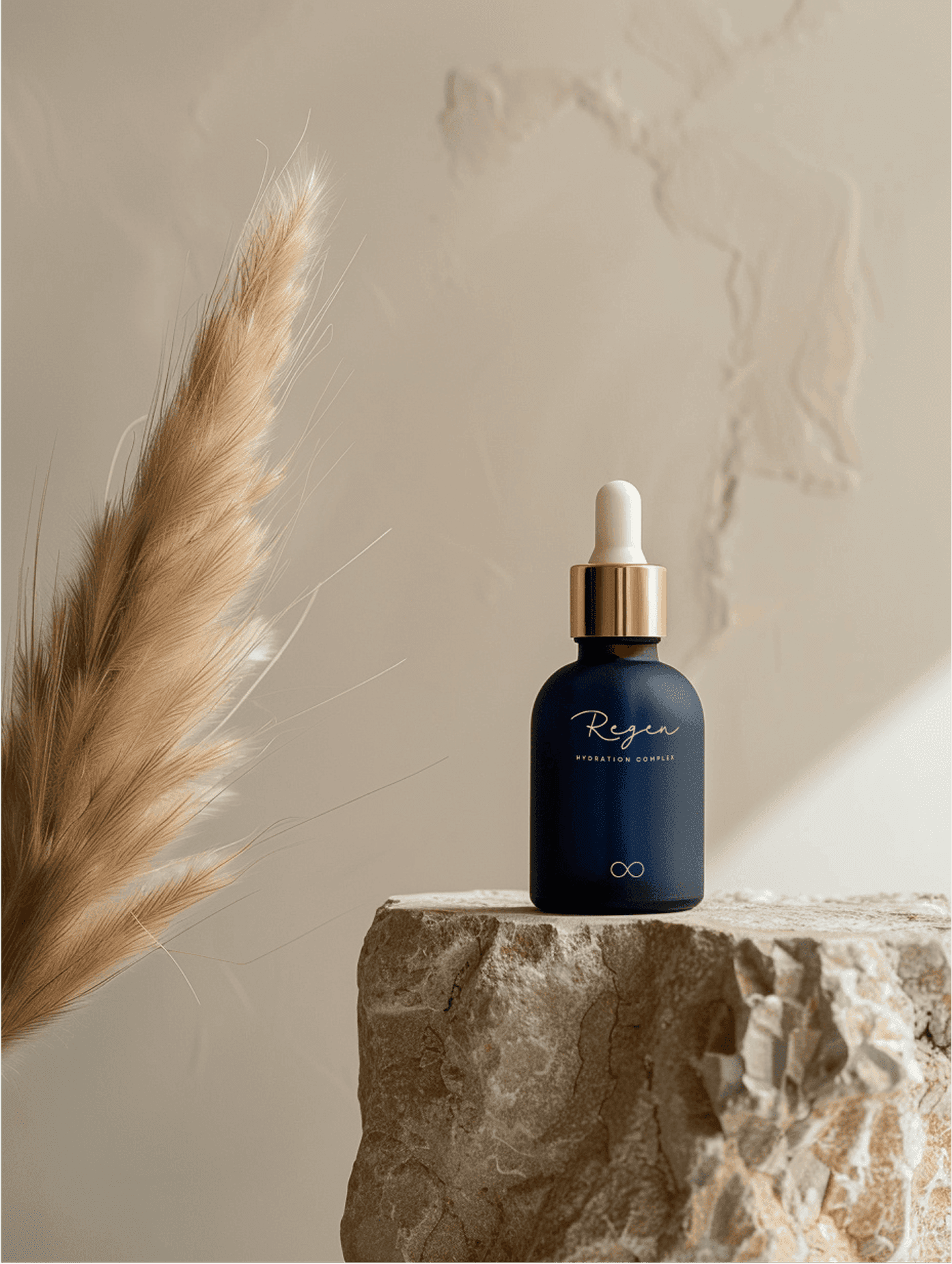
Beyond the site, I delivered logo variations across all color modes, social media templates, content frameworks, and brand guidelines covering typography, color, photography direction, and voice. The social team received a comprehensive asset library formatted for Instagram, print, environmental, and product applications. Everything they needed to produce on-brand content at volume without coming back for every post.
This is where most brand projects stop, and where this one kept going.
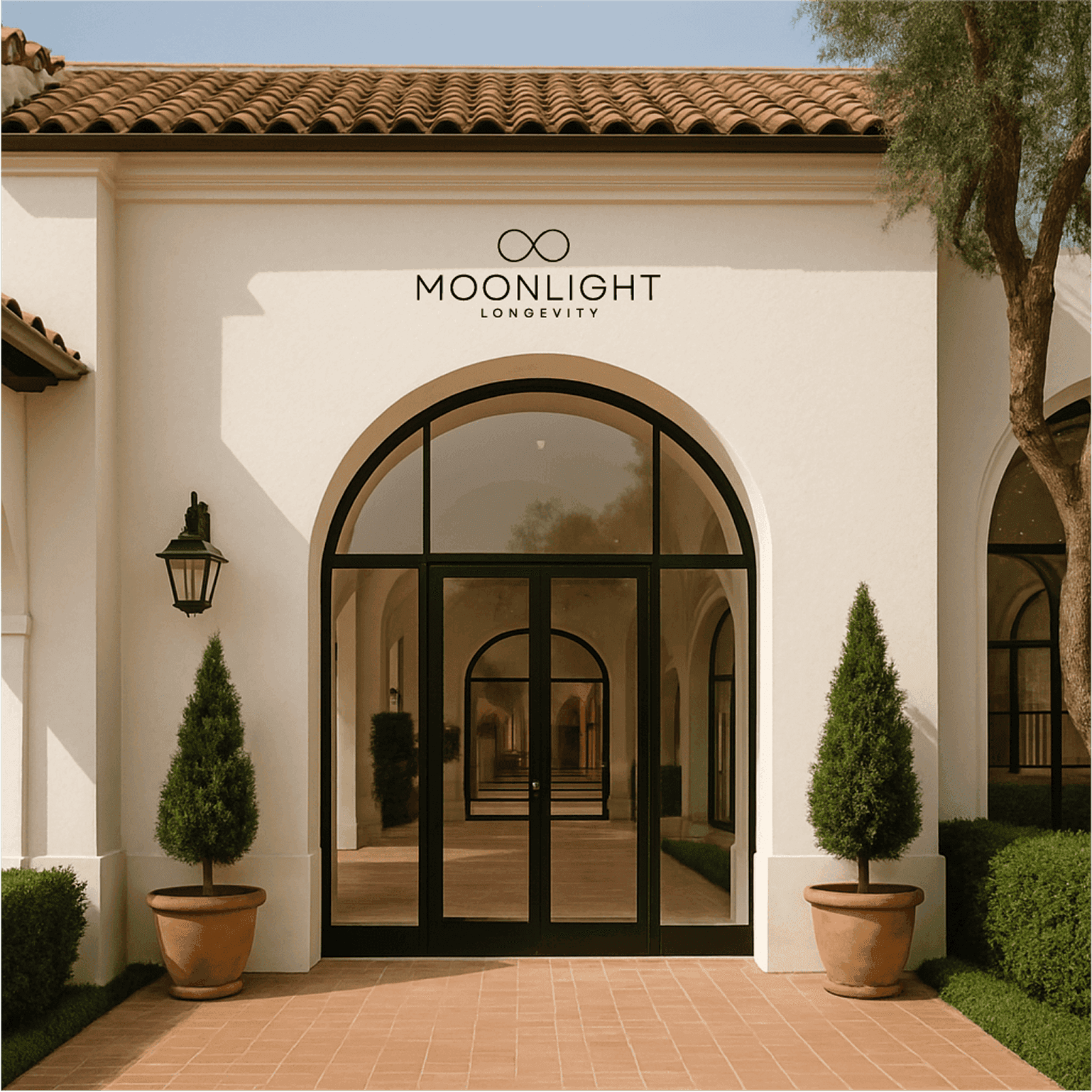
While the site was being built, the founder was working with an interior designer on the physical space. I coordinated directly with that designer to ensure the brand translated into the environment. The dark-and-gold palette carried through to furniture selection, upholstery, and accent materials. The color system informed the choice of scrubs, towels, and linens. Environmental graphics and signage used the same typographic system as the website. The overall atmosphere was designed to be consistent from the first website visit to the first in-person appointment.
The goal was straightforward: a patient's first impression online and their first impression walking through the door should feel like the same experience. No dissonance between the digital and the physical.
The coherence worked. Moonlight went from zero patients to fully booked in six weeks, in a market where new practices typically spend months building through referrals. The brand assets enabled an Instagram presence that grew to thousands of followers, building community and credibility in parallel. Patients consistently reported that the space felt established, as if it had been there for years.
Building a brand before the business exists and having it perform from day one is the whole point. What mattered most was understanding the physical environment the brand would live in, and understanding who the people walking through the door thought they were.
Zero patients to fully booked in six weeks. A brand built before the business existed, performing from day one.